
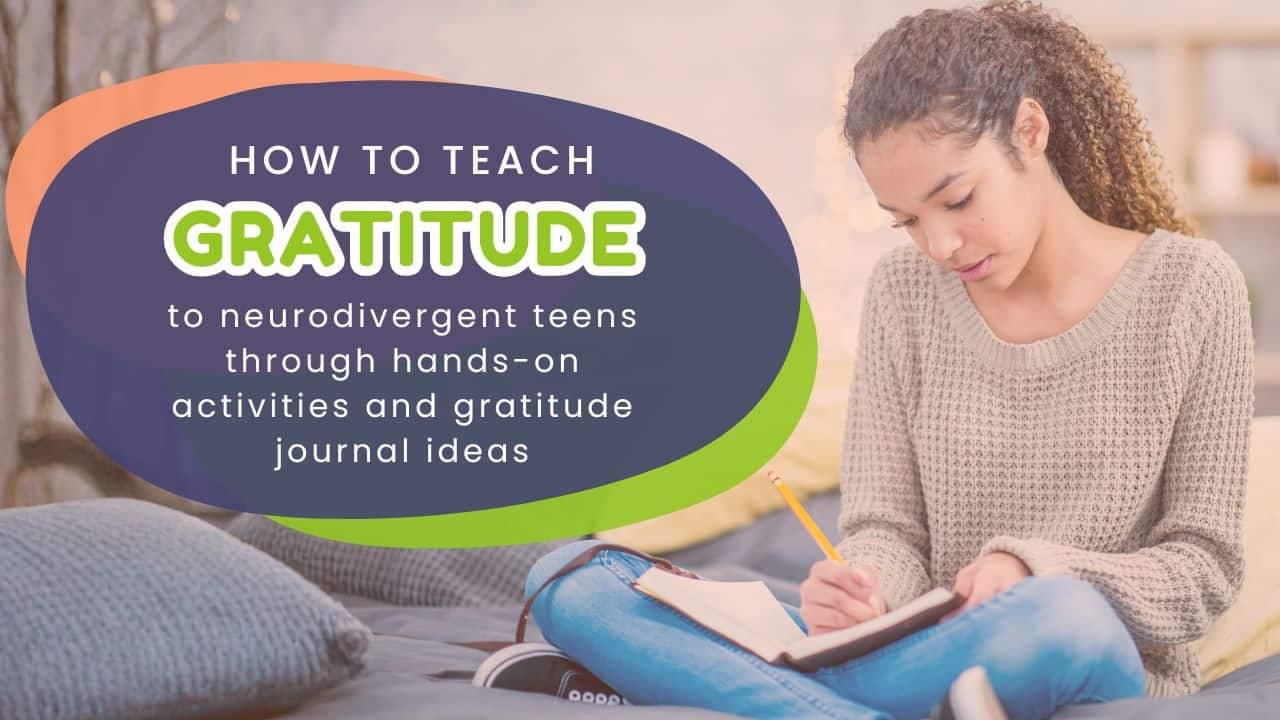
Gratitude isn’t just saying “thank you.” It’s noticing the good, expressing appreciation, and showing kindness in return. For many neurodivergent tweens and teens, these social steps can feel confusing, forced, or awkward—especially in group settings. The good news? Gratitude can be taught in fun and meaningful ways through things like hands-on activities and gratitude journal ideas — and it can also become a powerful bridge for building friendships, empathy, and social connection.
Our Unique Learners character / social skill for November is Gratitude or Gratefulness. Here are practical, mom-tested gratitude activities designed specifically for homeschooled neurodivergent learners who thrive with structure, creativity, and real-life practice.
1. Start With Personal Gratitude Routines
Before gratitude can be shared, it must be noticed. Help your tween or teen build awareness with small daily routines.
Try These:
- “3 Good Things” Whiteboard – Each day list 1 thing you did well, 1 thing someone else did, and 1 thing that made you happy.
- Gratitude Jar with Prompts – Include prompts like “Someone who helped me…” or “Something I used today…” to avoid vague answers.
- Sensory Gratitude – “What did I see/hear/touch/taste/smell today that was good?” This works especially well for sensory-seeking or sensory-avoidant learners.
Why it works: It builds the skill of noticing—a key step in social awareness.
2. Turn Gratitude Into Acts of Kindness
Many neurodivergent learners understand gratitude better by doing rather than talking.
Hands-on ideas:
- Bake or craft an appreciation gift for a neighbor, coach, grandparent, or co-op leader.
- Help pack care kits for shelters, foster care, or missionary families.
- Do a “secret service challenge”—do something kind anonymously.
Why it works: Taking action teaches that gratitude is more than words—it’s connection.
3. Use Role-Play to Practice Thankfulness in Real Social Situations
Saying “thank you” can feel robotic or confusing. Role-play makes it safe and clear.
Practice:
- Receiving a gift you didn’t love (what do you say?)
- When someone compliments you (how do you respond?)
- When someone helps you (what’s a grateful response?)
- Being thanked by someone else (how to reply without shutting down)
Make it silly and low-pressure! Use props, scripts, or even puppets.
4. Gratitude Journal Ideas — Make Them Tween/Teen Friendly
Instead of writing long reflections, try giving gratitude journal ideas in these formats:
- Bullet lists
- Drawing
- Stickers or photos
- Collage pages (“People I appreciate,” “Things I’d miss if they were gone”)
- Digital version using Google Slides or Canva
Bonus idea: Create a shared gratitude journal as a family or with friends!
5. Group Gratitude Games (In-Person Meetups Moms Can Host!)
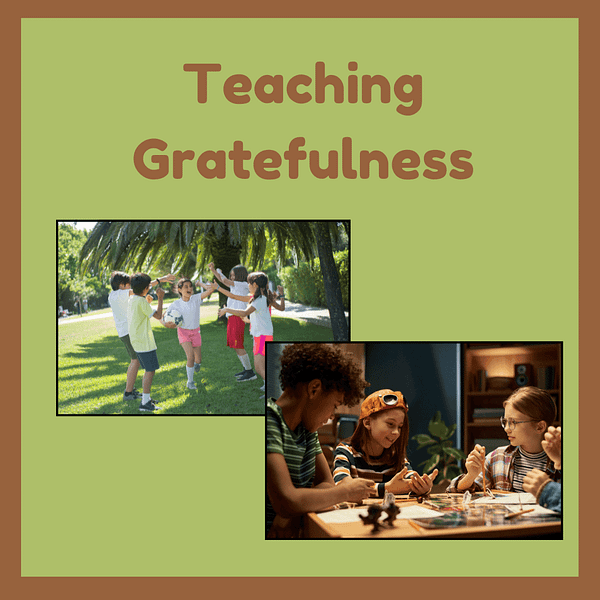
Host a low-pressure social hangout with built-in structure so kids can practice gratitude together.
Game Night + “Thankful Token” Challenge
Each player gets a few “tokens.” When someone helps, shares, or is kind during the game, you give them a token and say why. At the end, kids can turn in tokens for candy or small prizes.
Collaborative Puzzle or Build Task
Get easy jigsaw puzzlez. Floor puzzles for any elementary age or 100 or 300 pieces for teens. Have kids work in pairs or groups of 3 or 4. At the end, share “one thing each person did that helped the team.”
Gratitude Scavenger Hunt
Find…
- Something someone made for you
- Something you use every day
- Something that makes life easier
- Something that reminds you of a friend
Discuss what you found and who you appreciate because of it.
6. Social Events That Naturally Promote Gratitude
✅ Host a “Thank You” Craft Party
Make cards, videos, digital art, or baked treats to give away. Create a list of people to appreciate (family, church, co-op leaders, firefighters, etc.).
✅ Do a “Gratitude Potluck”
Every family brings a dish and shares a short story of something they’re thankful for this year. Teens can share through speech, art, or slide presentation—whatever fits their communication style.
✅ “Gratitude Talent Showcase”
Kids perform anything they enjoy (music, gaming tips, art, comedy). Afterwards, everyone says one thing they appreciated about each performance—great practice in giving and receiving compliments!
7. Practice Gratitude Through Minecraft & Gaming!
Video games are a safe, motivating place for social skill practice—without eye contact stress or body language overwhelm.
Here are gratitude-based activities you can host in Minecraft or similar games:
🎮 Collaborative Build Challenge
Build a village or monument together. Each player is responsible for one area. At the end, everyone shares appreciation for what each person built.
🎮 “Kindness Currency”
Give players a special item they can only receive from someone else. Players must “gift” these items when someone helps, shares resources, or shows teamwork. Exchange them for in-game rewards.
🎮 Thankful Treasure Hunt
Hide signs or books that say something kind or thankful about different players. When someone finds one with their name, they read it aloud.
🎮 Help Missions
Pair players and give them tasks where one must rely on the other. Afterwards, they thank their partner and explain how they helped.
Tip for moms: Use voice chat or a safe private server so you can guide social moments gently (“That was kind—try thanking them!”).
8. Teach How to Respond to Gratitude (Equally Important!)
Some neurodivergent teens freeze or feel embarrassed when someone says “thank you.”
Practice simple responses:
- “You’re welcome.”
- “I’m glad I could help.”
- “No problem!”
- Smile + thumbs up
Create scripts, visuals, or even emojis to practice!
9. End Each Day or Family Time with “Gratitude Reflections”
Keep it quick and flexible:
- One thing I appreciated about someone today…
- Someone who helped me was…
- Something I did well was…
- One thing I’m thankful for…
This reinforces positive memories and builds confidence.
Final Thought: Gratitude Grows Connection
For neurodivergent tweens and teens, gratitude isn’t just polite behavior—it builds empathy, friendship, and community. When we teach it in hands-on, structured, and meaningful ways, our kids don’t just learn the words…
They experience the warmth of being seen, valued, and connected.
And that is the heart of true gratitude.
Grab your FREE e-book guide to revamp your homeschool for success!
Are you new to homeschooling, or just wanting a fresh start? Download our FREE “How to Homeschool in 6 Easy Steps” guide and get valuable insights from Sue’s 30+ years of experience as a special educator and homeschool mom of 4!
Want to know about new products and blogs?
Join our email newsletter to be the first to know about a new homeschool and special needs blog, and new products from our shop! Sign up for only the newsletter, or grab your FREE “How to Homeschool in 6 Easy Steps” guide and you will also be added to the newsletter!
Also, join our Facebook group!
Join our new “Homeschool Help for Special Needs” Facebook group! It is a place for homeschool moms to ask questions about homeschooling a child with special learning needs, share teaching and curriculum ideas that have worked (and those that bombed), and be real about the unique challenges of homeschooling with special needs. If you want to join us, be sure to answer the member questions to help us keep this private group secure. Join us now!


