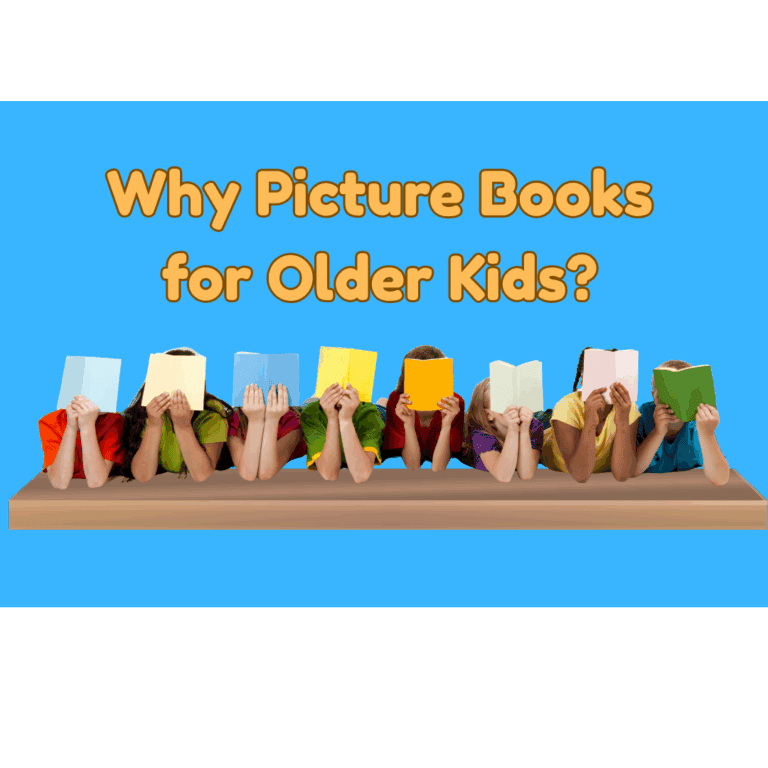
When most people hear the term picture books, they think of story time with young children, bright colors, and simple text. But picture books are not just for early readers. In fact, they can be powerful learning tools for older students in upper elementary, middle, and even high school. These books offer rich opportunities to explore complex ideas, practice literary analysis, and expand vocabulary. Here are some of the reasons educators and parents should consider using picture books with older learners:
1. Introducing Literary Elements in a Manageable Way
Picture books are often structured with clear examples of plot, setting, character development, conflict, and theme. Because the text is concise, students can more easily identify and discuss these literary elements without feeling overwhelmed. For example, an older student can analyze the rising action, climax, and resolution in a 32-page picture book before tackling a full-length novel.

2. Exploring Literary Devices and Figurative Language
Picture books frequently use a variety of literary devices such as symbolism, foreshadowing, and irony. The short format allows students to focus closely on these techniques. Additionally, many picture books contain vivid figurative language—metaphors, similes, alliteration, and personification—which can spark discussion and inspire students to use creative language in their own writing.
For instance, in The Arrival by Shaun Tan, the illustrations themselves act as symbols of displacement and hope, making it an ideal text to explore visual metaphor.
3. Building Sophisticated Vocabulary
While the sentences may be shorter, picture books often use precise and sophisticated vocabulary. Authors select words carefully to convey meaning in limited text. When paired with illustrations, unfamiliar words become more accessible because students can infer meaning through context clues in the artwork. This combination strengthens comprehension and vocabulary retention.
4. Encouraging Critical Thinking and Interpretation
Many modern picture books deal with complex themes—immigration, grief, resilience, social justice, identity—that are highly relevant to older students. Because the books rely on both text and illustrations to convey meaning, students must interpret multiple layers of information and consider how visuals contribute to the narrative. This dual processing develops critical thinking and media literacy skills.
5. Supporting Diverse Learners
Picture books can be especially helpful for English language learners or struggling readers because they provide visual scaffolding. The images help decode meaning, making challenging topics more approachable. At the same time, advanced students can dig deeper into nuanced themes and sophisticated literary techniques.
6. Inspiring Creativity and Engagement
Finally, picture books are simply engaging. Their art draws students in, and their brevity allows an entire story to be explored in a single lesson. This accessibility gives students confidence to participate in discussions and inspires them to create their own narratives, experimenting with literary devices and figurative language.
In Conclusion
Far from being childish, picture books are versatile texts that can enrich language arts instruction for older students, including those with dyslexia. The combination of visual storytelling, concise text, and high-interest themes can build confidence and make reading more accessible. Here are some excellent picture books to consider:
- The Arrival by Shaun Tan
A wordless graphic novel that tells a powerful story of immigration and belonging through detailed illustrations. - Wolves in the Walls by Neil Gaiman, illustrated by Dave McKean
A visually striking, slightly eerie tale that explores fear, imagination, and courage—ideal for discussions of theme, mood, and figurative language. - Voices in the Park by Anthony Browne
Four narrators share their perspectives on the same park visit, offering rich material for exploring point of view and tone. - The Red Tree by Shaun Tan
A visually symbolic portrayal of hope and depression, perfect for discussing metaphor and emotional inference. - Henry’s Freedom Box by Ellen Levine, illustrated by Kadir Nelson
A historical story about an enslaved man who mailed himself to freedom—clear narrative structure and impactful illustrations support comprehension. - The Mysteries of Harris Burdick by Chris Van Allsburg
A collection of mysterious images and captions that invite older students to interpret, infer, and write their own stories. - Home in the Woods by Eliza Wheeler
A beautifully illustrated Depression-era story about resilience, with sophisticated vocabulary presented in an accessible format. - Journey by Aaron Becker
A wordless adventure tale that encourages interpretation of visual metaphor, plot structure, and character motivation. - Tuesday by David Wiesner
A nearly wordless book full of humor and mystery—great for inference and creative writing prompts.
Whether you’re teaching plot structure, figurative language, or critical thinking, picture books like these offer a unique, effective, and enjoyable way to deepen students’ understanding of literature while supporting diverse learning needs. Don’t hesitate to pull a picture book off the shelf—you might be surprised by how much learning it inspires.