Teaching multiplication tables is a critical skill for kids with dyscalculia or other math issues. Even more than addition and subtraction facts, multiplication is key to making connections in math and being able to move forward in fractions, algebra, and geometry. We focus on the 2 through 5 times tables heavily because those facts are used the most in every day life; however, the x6 table often gets overlooked after the easier ones. Yet, mastering the times 6 table can significantly boost a child’s number fluency and confidence in math. So how to memorize multiplication facts? How do we get the times 6 facts to stick?
Let’s dive into some tried-and-true methods to make learning the six times table both engaging and memorable.
Why Focus on the x6 Table?
The 6 times table is a gateway to higher multiplication facts and lays a strong foundation for division, fractions, and algebra later on. Unlike the easier multiples, the x6 table doesn’t have as many “tricks,” so kids need structured practice with patterns, visuals, and real-life examples.
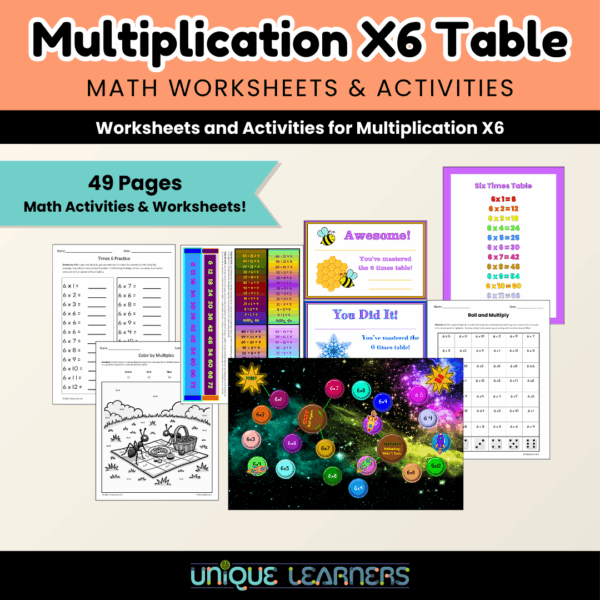
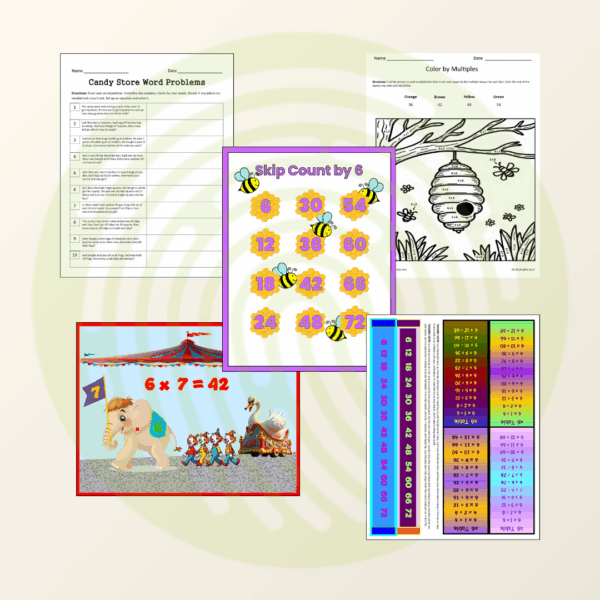
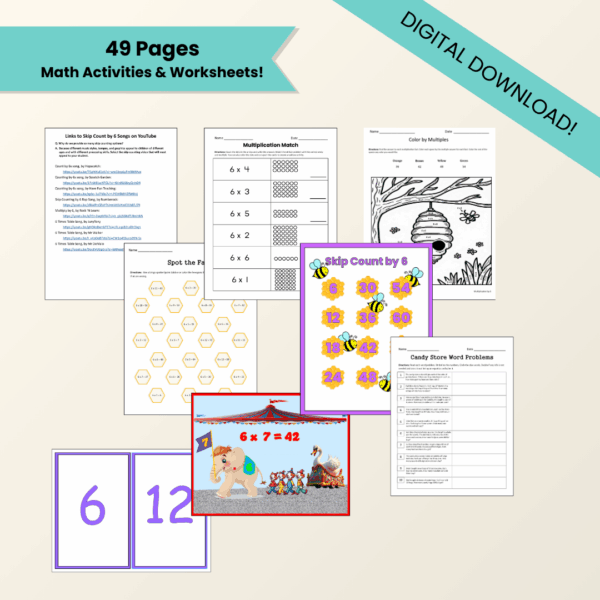
If you need worksheets, activities, and ideas, you will love our Multiplication x6 Unit Study! This downloadable file includes 49 pages of links, suggestions, worksheets, and a full-color file folder game!
1. Start with Patterns & Relationships
Children love patterns. One cool pattern in the x6 table is that every product has the even numbers in the units place, so the six times facts are all multiples of 2!6, 12, 18, 24, 30, 36, 42, 48, 54, 60
You can also point out that multiplying by 6 is just doubling the x3 facts! For instance:3 x 4 = 12 so 6 x 4 = 24 (double 6 is double of 3, so 24 is double of 12).
You can also help make this 2 and 3 connection by changing unlike denominators of 2 and 3 when adding or subtracting to sixths. Like this:
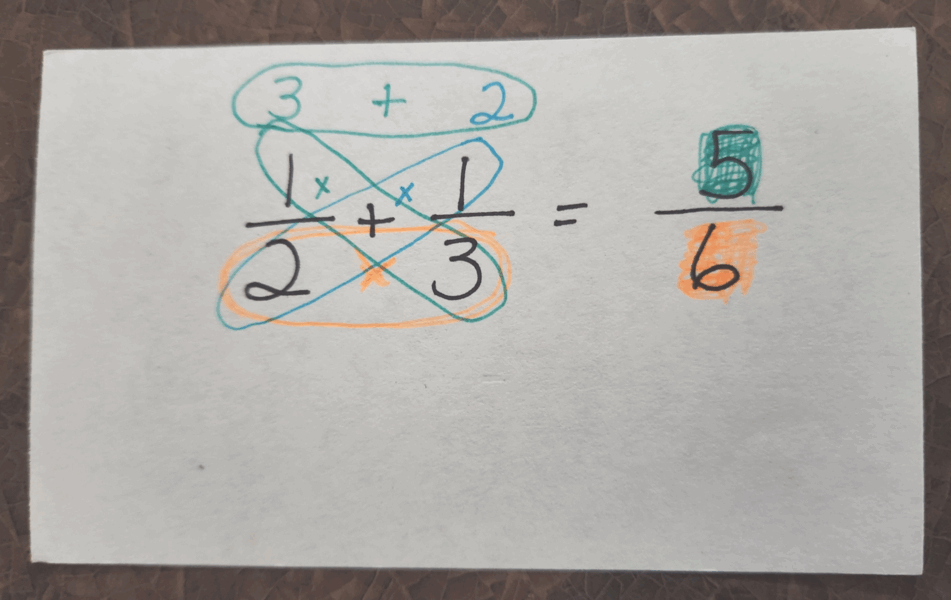
1/2 + 1/3 = 3/6 + 2/6 = 5/6
Any connections your child discovers can reinforce prior knowledge and build number sense.
2. Use Arrays and Visual Models
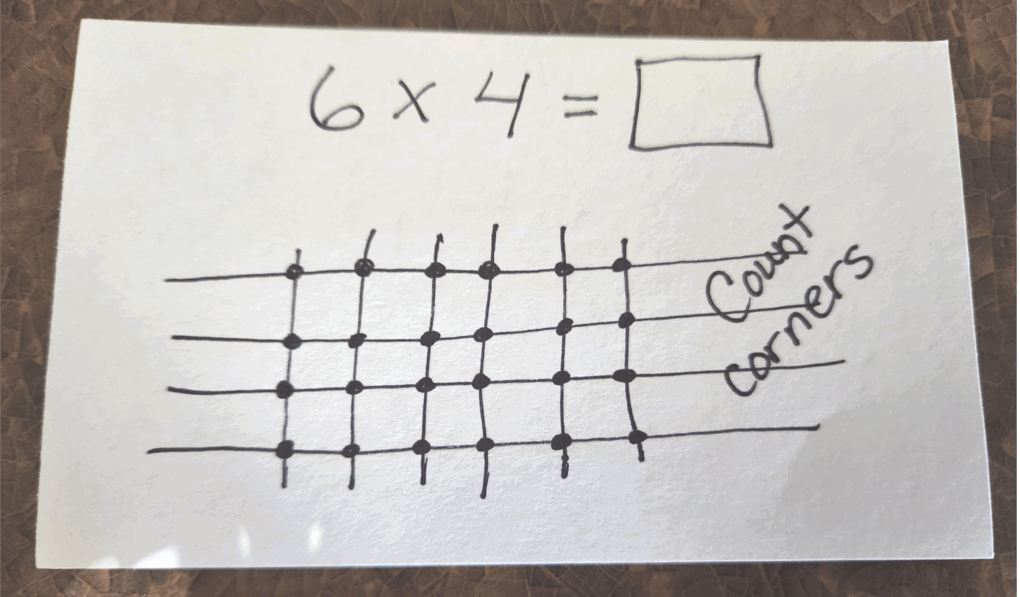
Visual learners benefit from arrays and grids. Representing 6 x 4 as 6 rows of 4 dots helps make the concept concrete. You can also use counters, LEGO bricks, or drawing grids to physically build the 6 groups. One of my favorite strategies is to draw vertical and horizontal lines for the factors and count the intersections. Like this:
Interactive tools like Toy Theater’s Multiplication and printable arrays can aid this hands-on approach.
3. Practice with Songs and Rhythms
Skip Counting and Multiplication songs are magic for memory because it activates both the right and left hemispheres of the brain for better memorization. The rhythmic nature of music helps facts stick without “drill and kill” repetition of times math fact worksheets.
Here’s one of our favorite skip counting songs from Hopscotch. It’s one of the best for kids with dyscalculia because kids see both a picture version of each fact AND the numbers as they are sung.
Look for catchy 6 times table songs on YouTube that will appeal to your child. There are many videos to pick from because music style preferences are different for different learners. Our Multiplication x6 Unit Study has a whole page of YouTube times 6 suggestions. Here’s one from Jack Hartmann, which pairs facts with visuals and strong rhythm.
4. Real-Life Applications
Bring relevance to the x6 table by showing where it pops up in daily life:
- Time: 6 hours in a quarter-day. The hour hand moves from 12 midnight to 6 in the morning, 6 am to 12 noon, and around again for 12 noon to 6 pm and back up from 6 pm to 12 midnight.
- Egg cartons: typically hold 6, 12, or 18 eggs. You can even make a bean throwing game with an egg carton and the times 6 facts.
- Insects: most have 6 legs. Make an insect collection or purchase insect counting toys.
Pose real-life problems like:
“There are 6 chairs in each row and 7 rows. How many chairs are there in all?”
To do word problems, I have kids underlines the numbers in the problem, circle any clue words, and focus on the question. In this problem, underline 6 and 7. Circle the clue words each and in all. These clue words indicate to multiply. So 6×7=42.
If needed, set up 7 rows of chairs with 6 chairs each, pictures of chairs, or other small objects. Your child can also practice drawing dots or their own pictures. It’s ok to let your child use manipulatives way longer than YOU think they should. When the facts start to stick, your child will be eager to let go of the concrete tools.
All of these practice strategies help to bridge abstract math to tangible scenarios.
5. Use Mnemonic Clues
Sometimes a specific fact just won’t stay in a kiddo’s memory. In these hard cases, we can apply a mnemonic clues strategy. Times Tales is an great curriculum for some kids because each numeral is turned into an object with a story attached to each specific fact. However, if you can help your children make up their own silly memory clue or story, it will stick even better!
For example, one story I tell my students is that 6 x 7 is a parade. We use a picture to represent 6 as an elephant carrying a 7 flag. Next in the parade are 4 silly clowns. Then comes a parade float with a humongous swan (2). If your kids can draw their own parade and the 6×7=42 fact on their own poster, hang it up where it can be seen frequently. In just a few days, that fact will be permanently recalled.
5. Gamify the Practice
Turn multiplication into a fun challenge with online practice games. There are many phone apps and free computer games online. Here are a couple:
- Math Playground – Penguin Jump
- Online games like Hit the Button
Not all games have to be online. Interactive board games for many kids are a reward just for the time spent with YOU. We have lots of folder board games on the Unique Learner’s website, and especially in our Multiplication x6 Unit Study!
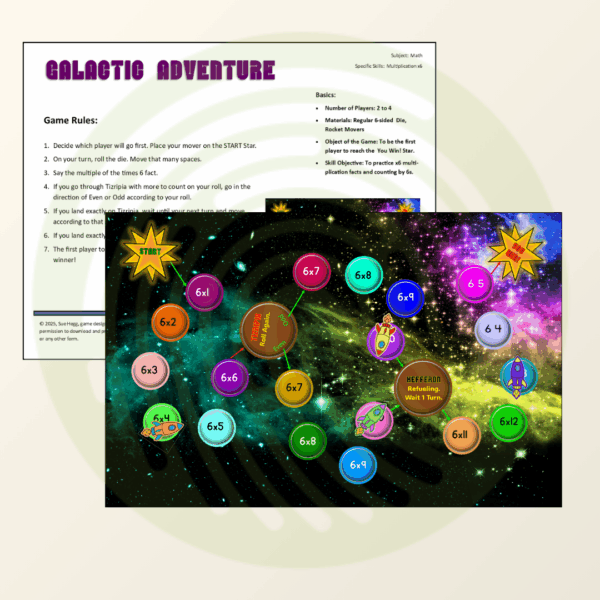
Make your games moving by using flashcards and rolled up socks or bean bags. You can play trash can sock baskeball or a bean bag toss game!
Some kids freak out when presented with timed math drill worksheets. For these kids, gamified practice works the very best to get automatic recall. Use a times chart at first, but if your games focus on one or two times table lists at a time, the repetition can help to remove the cue cards or manipulative helps as their skills improve.
Click here to get our FREE Multiplication Madness Game for reviewing all of the times facts.
Games of any kind to practice the six multiplication facts can help to boost engagement and reinforce speed and accuracy.
6. Get to Mastery, Take a Break, Review to Maintain
There is a teaching strategy called “Spacing.” This strategy is not about spacing between words for handwriting. The theory is to work to basic mastery of 80%. Then take a break for a week or two. Come back and review that same multiplication table again. Then take a little bit longer break. Keep cycling through reviewing each times table list.
I have found that most high schoolers who struggle in math (with or without a diagnosis) still benefit from from maintenance review of times facts all the way through. Of course, this review is frequently presented in the math problem sets within their curriculum. However, some kids need explicit and direct practice that is set aside for each spacing break. Kids are not offended to do occasional reviews when it is done intentionally and not as a punishment for forgetting. Just build in the review as part of the learning process.
If you are facing the higher multiplication tables, try some of the strategies listed here in our blog. Or get our Multiplication x6 Unit Study for more ideas, activities, games, and worksheets!
Useful Resources & References:
- Top Marks – Hit the Button Multiplication
- Toy Theater – Multiplication
- Jack Hartmann – 6 Times Table Song
- Hopscotch – Count by 6 Song
- Unique Learners – Multiplication x6 Unit Study
Final Thoughts
Teaching the times 6 table isn’t about memorizing random numbers — it’s about building connections, using visuals, and making it fun. With these methods, kids will not only remember their 6s but understand them.