The daily life in a neurodivergent homeschool is a beautiful mix of creativity, structure, and “okay, let’s pivot again!” The good news? Your child doesn’t need a Pinterest-perfect classroom. They just need a space and a routine that support how their brain focuses, calms, and learns.
Here’s how to create a sensory-friendly, steady-but-flexible neurodivergent homeschool environment that helps your child (and you!) feel grounded and successful.
1. Start With the Environment: A Space That Supports the Nervous System
A well-designed homeschool space doesn’t have to be big — but it does need to be intentional.
Keep the Visual Field Calm
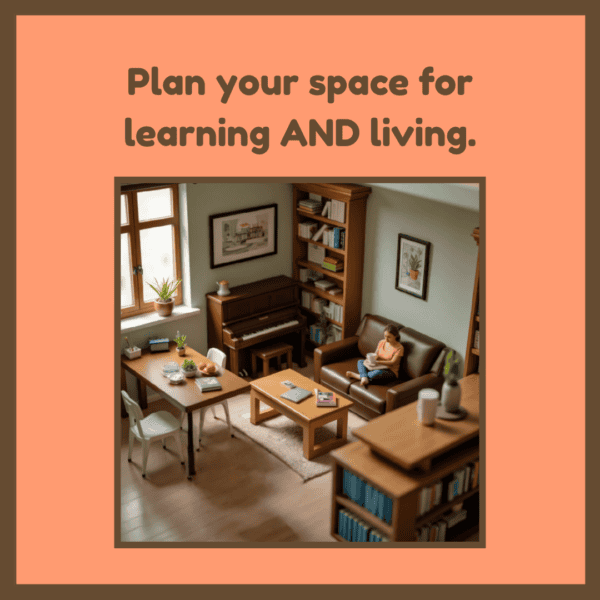
Neurodivergent homeschool learners often get distracted or overwhelmed by visual clutter.
Try:
- Neutral or soft colors
- One wall with charts and visuals — not all four, or spaced around the house in walk ways
- Covered storage (bins, baskets, cabinets) with labels – and pictures if needed
- A simple shelf or dishpan or crate with only what they need for the day
A calm room = a calm brain.
Create Neurodivergent Homeschool Zones
Zoning the space helps the student’s brain automatically shift into “mode.”
- Work Zone: table or desk
- Meeting and Reading Zone: couches and comfy chairs with baskets for books
- Movement Zone: mini-trampoline, resistance bands, crash pad, yoga mat
- Calm-Down Zone: beanbag, blanket, noise-canceling headphones, chewable jewelry
- Creative Zone: art cart, LEGO drawer, puzzles
The rule: every zone has a purpose and only a few items.
Honor Sensory Needs
Sensory tools don’t spoil learning — they unlock it.
Offer:
- Fidgets (pre-approved, not loud!)
- Weighted lap pads
- Soft lighting or lamps
- A small fan or white noise
And don’t forget: some kids learn best standing, swinging, rocking, bouncing, lying down, or upside down. Give permission for bodies to move.
2. Build a Routine That Makes Sense for a Neurodivergent Homeschool Brain
Neurodivergent kids thrive on predictable rhythms — just not rigid timelines. They also get bored when the routine goes too long. These ideas can help you have a regular routine with opportunities for novelty built in.
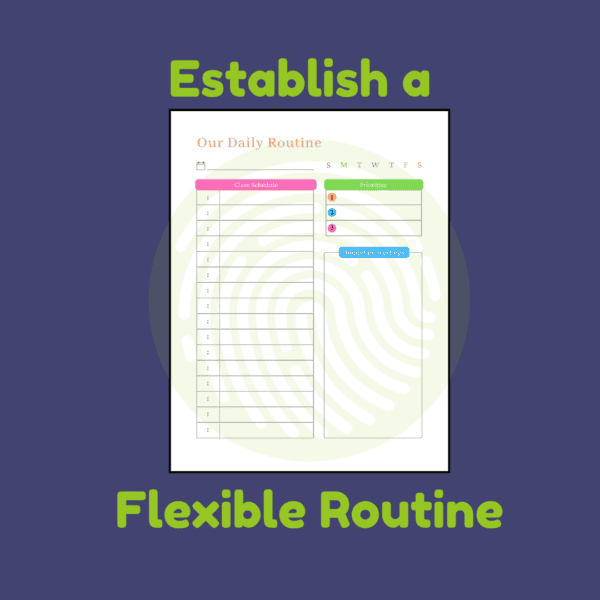
Use a Visual Schedule
Even older learners benefit from a simple visual plan for the day:
- Moveable icons on Velcro
- A picture schedule
- A dry-erase checklist
- A printed agenda with boxes to cross out
- A laminated checklist for older students
Seeing the plan reduces anxiety and gives the day shape.
Use the “Anchor Points” Method
Instead of scheduling every minute, create anchors throughout the day:
- Morning warm-up
- Midday movement break
- Before Lunch tidy and chores
- Lunch
- Early Afternoon quiet time
- Mid Afternoon activities
- End-of-day tidy and chores
Everything else flows around these stable points.
This gives structure without pressure.
Keep Neurodivergent Homeschool Lessons Short and Varied
Neurodivergent attention rhythms look more like bursts than long stretches.
Try:
- 10–15 minutes of direct teaching
- Followed by hands-on work, movement, or play
- Rotate subjects so the brain keeps waking back up
This is not “coddling.” It’s working with their brain instead of against it.
Plan Movement Like It’s a Subject
Movement isn’t a break — it’s a regulation tool.
Mix in:
- Between-subject movement (2–3 min)
- Big-body play (trampoline, swings, sensory gym)
- Outdoor time
A regulated nervous system learns better than a still one.
3. Put Predictability and Autonomy Together in your Neurodivergent Homeschool
This is the magic combo for neurodivergent kids!
Offer Controlled Choices
“Do you want to start with math or reading?”
“Pick one: writing at the table or on the beanbag?”
“Two worksheets or one worksheet + a game?”
Control reduces anxiety.
Choice builds ownership.
Use Routines Within Routines
For example, your reading block might always look like:
- Warm-up decoding game
- Phonics and spelling word study
- Read together
- Independent reading or hands-on activity
When kids know what to expect, resistance drops.
4. Reduce Transitions (or at Least Smooth Them Out)
Transitions are often the hardest part of any school day.
Try:
- A 5-minute warning
- A visual “Now/Next” card
- A transition object (fidget, marker, small toy)
- Moving the body before and after each shift
Kids handle transitions better when they know they’re coming and have something to do with their hands or body.
5. Keep the Tools Simple, Accessible, and Consistent
Don’t overload them with materials. Instead, curate.
Have:
- One math program
- One reading system
- One writing workflow
- One set of daily supplies in a caddy
Less choice = less overwhelm.
If you prefer to have an instructional program and a review program for those “off” days, keep the programs on your shelves or bins. Use folders or task boxes for your child’s independent work.
Consistency builds fluency, which builds confidence.
6. Expect the Routine to Evolve in a Neurodivergent Homeschool
Your child will go through growth spurts, sensory shifts, attention changes, and new interests.
So your homeschool rhythm will shift too — and that’s completely normal!
A neurodivergent homeschool is a living ecosystem.
Check in every month:
- What’s working?
- What’s draining us?
- What needs to be added — or removed?
Adaptation is not failure. It’s good teaching!
7. And Finally: Protect the Relationship Above All
At the end of the day, your relationship is the real curriculum.
Connection makes learning safe.

So:
- Build in little joys and breaks that your child values.
- Add humor – Being silly, talking about jokes and idioms can help your child with language skills and give you inside jokes to help you laugh together.
- Take snuggle breaks.
- Incorporate play – even for older learners.
- Notice effort and use encouraging words.
- Celebrate tiny wins – often!
A regulated, connected child learns twice as fast in half the time.
Neurodivergent Homeschool Final Thoughts
Creating a successful neurodivergent homeschool space and routine is not about perfection — it’s about supporting the way your child’s brain works. When the environment calms the body and the rhythm respects the nervous system, learning becomes smoother, happier, and way more sustainable.
You don’t need a fancy homeschool room.
You just need a space with intention, a routine with flexibility, and a daily flow that honors your child’s unique wiring.
Grab your FREE e-book guide to revamp your homeschool for success!
Are you new to homeschooling, or just wanting a fresh start? Download our FREE “How to Homeschool in 6 Easy Steps” guide and get valuable insights from Sue’s 30+ years of experience as a special educator and homeschool mom of 4!
Want to know about new products and blogs?
Join our email newsletter to be the first to know about a new homeschool and special needs blog, and new products from our shop! Sign up for only the newsletter, or grab your FREE “How to Homeschool in 6 Easy Steps” guide and you will also be added to the newsletter!
Also, join our Facebook group!
Join our new “Homeschool Help for Special Needs” Facebook group! It is a place for homeschool moms to ask questions about homeschooling a child with special learning needs, share teaching and curriculum ideas that have worked (and those that bombed), and be real about the unique challenges of homeschooling with special needs. If you want to join us, be sure to answer the member questions to help us keep this private group secure. Join us now!