Alright friend, let’s dig into one of the most universal homeschool questions I hear from moms of creative, bright, struggling readers: “How on earth do I begin teaching phonics and reading when my child is YEARS apart in different skills?”
If you’ve got a kiddo with dyslexia, ADHD, autism, processing weaknesses, or just plain spiky skills, you already know the truth: phonics is not a one-and-done, first-grade-only subject. It’s a K–12 lifeline—especially for the kids who need explicit, systematic instruction longer than the average curriculum accounts for.
This article will walk you through how to begin teaching phonics and reading from grades 1–12, how to adapt instruction for strugglers, and tons of multisensory, movement-rich spelling activities you can use tomorrow. And yes—you can absolutely grab ready-made supports and leveled resources inside Unique Learners Phonics at www.uniquelearnersllc.com.
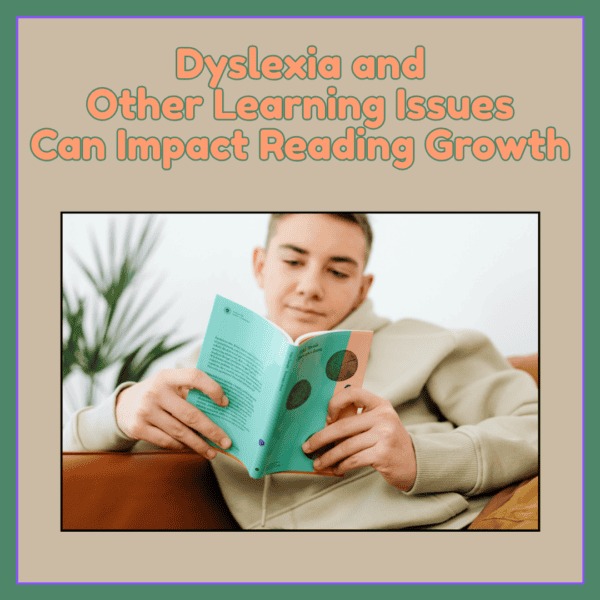
Struggling readers aren’t “behind”—they simply need more time, more clarity, and more senses engaged. Phonics is the foundation that helps them decode unfamiliar words, spell accurately, and grow confidence. But what this looks like in 1st grade vs. 5th grade vs. high school? Very different.
Let’s break it down so you can begin teaching phonics and reading.
Reading Levels Grades 1–2: Build the Base (Even if Restarting)
Early readers (and older kids who didn’t master these skills yet) need:
- Solid phonemic awareness
- CVC words, digraphs, blends
- Short vowels
- Common long-vowel patterns
- Simple syllable division
What to focus on:
Consistency. Predictable routines. Lots of modeling.
Multisensory ideas:
- Tap & Map: Tap each sound on fingers, then map into boxes on paper or a whiteboard.
- Sand or Salt Trays: Write a word with your finger while saying each phoneme aloud.
- Build-a-Word: Use letter tiles, magnets, or index cards with single phonemes.
If you want simple, print-and-go supports with controlled word lists, our Unique Learners Phonics materials are perfect.
Reading Levels Grades 3–5: Close the Gaps & Build Automaticity
Upper-elementary strugglers often read some words well but inconsistently. You’ll see substitutions, guessing, reversing, or skipping. Repeated reading is the most effective strategy to build reading fluency.
Skills to target:
- Multi-syllable decoding
- Syllable types
- Prefixes, suffixes
- Vowel teams & tricky patterns
- R-controlled vowels
- Spelling generalizations (“k” vs “ck,” “tch” vs “ch,” etc.)
Multisensory ideas:
- Color-Coded Syllable Splits: Write long words, then highlight syllables in alternating colors.
- Magnetic Word Surgery: “Cut apart” long words on magnets (har/bor/ing) to show structure.
- Chunk Walk: Put paper “chunks” on the floor—students step on each chunk while reading the full word aloud.
Unique Learners Phonics has leveled advanced syllable practice, morphological spelling routines, and decodable passages that match exactly where kids are—not where the grade level “expects” them to be.
Reading Levels Grades 6–12: Fill Foundational Gaps
Older struggling readers often feel embarrassed doing “immature” materials—but they still need explicit instruction when you are teaching phonics and reading. The key is respectful, age-neutral tools.
Skills to target:
- Morphology (roots, prefixes, suffixes)
- Accent rules
- Advanced vowel patterns
- Greek & Latin roots for vocabulary
- Spelling across syllables
- Self-correction strategies
Multisensory ideas for teens:
- Whiteboard Speed Races: Say a word → they segment & spell → quick correction.
- Morphology Sorts: Sort roots into meanings (tele = far, bio = life).
- Keyword Anchoring: Build personal “sound walls” with teen-appropriate vocabulary.
- Hand Motions for patterns (e.g., swooping hand for open syllable, karate chop for closed syllable).
- Sticky-Note Word Hunts: Place sticky notes on rich vocabulary around the house → teens classify patterns.
Older learners LOVE understanding the “why” behind English spelling—teaching structure actually removes shame.
Unique Learners Phonics includes teen-friendly morphology units and decodable-but-not-babyish passages that work beautifully in homeschool settings.
Multisensory Spelling Activities for Any Grade
Because spelling is NOT just “write it ten times.”
Here’s a grab-and-go list you can rotate through:
🔹 1. Say–Tap–Write–Check
Students tap each phoneme while saying it, write the full word, and then check pattern rules.
🔹 2. Syllable Flip Cards
Make a deck of syllables, flip two or three to build real or nonsense words, and read/spell them.
🔹 3. Rainbow Routine
But with intent—use color only to highlight patterns (all vowel teams in blue, all prefixes in green).
🔹 4. Shaving Cream Spelling
Messy? Yes. Memorable? Absolutely.
🔹 5. Morphology Match Game
Match roots to meanings and build quick compound or multisyllabic words.
🔹 6. Air Writing With Muscle Memory
Have the student “write” large letters in the air using whole-arm movements while saying sounds.
🔹 7. Word Building Race
Give letter tiles and a pattern (“make 5 words with -tion”). They build → decode → spell.
🔹 8. Phonics Pathways on the Floor
Tape vowel teams or syllable patterns on the floor. Kids hop to them while reading or spelling aloud.
🔹 9. Tactile Tiles
Use felt, sandpaper letters, craft sticks, or wooden tiles to engage touch + movement.
🔹 10. Dictation With Scaffolds
Not old-school dictation—guided dictation:
You say the sounds → they tap …
You give the pattern → they build …
They write … then explain their reasoning.
Transferring Phonics to Reading Fluency
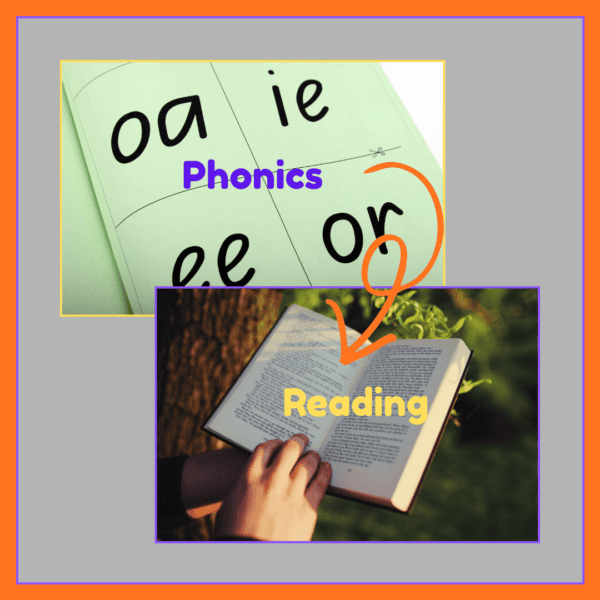
So, once we are finished teaching phonics and reading basics, how do the decoding skills transfer to actual reading fluency? Phonics becomes fluent reading when students move from sounding out words to reading them smoothly in real text. This happens through rapid naming of words in isolation, repeated practice with decodable books, short passages, and seeing familiar word patterns. Rereading, echo reading, and timed practice can help students build accuracy, speed, and confidence – when done correctly. As decoding becomes automatic, the brain has more space to focus on meaning instead of effort. The research shows a very high correlation between reading fluency and comprehension.
Building Comprehension Skills
Comprehension grows when students actively think about what they read. This includes predicting, asking questions, visualizing scenes, and retelling key details in order. Strong vocabulary instruction, background knowledge, and discussion all support understanding. When students read texts at the right level and talk about ideas, characters, and facts, comprehension steadily deepens.
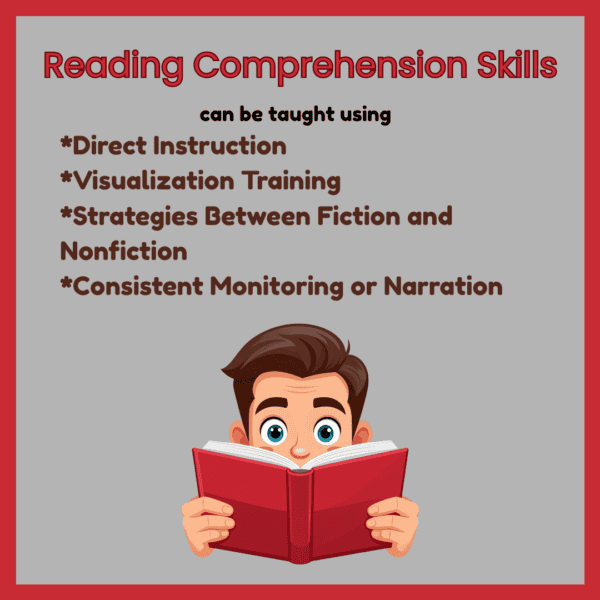
But some students still struggle with comprehension skills, even after teaching phonics and reading core principles. This may be due to a disconnect between the visual and auditory processing systems. One intervention for building comprehension is to practice drawing or making mental pictures or text passages that are full of nouns and action verbs, making it easy to visualize what the text is communicating. Another issue could be using the context of the whole paragraph or passage to fill in the blanks as decoding skills are applied. As the student gains more skill in decoding new words, building reading vocabulary, and visualizing the story action, more advanced comprehension strategies can be taught after teaching phonics and reading fundamentals.
Teaching Struggling Readers Is a Long Game — But So Worth It
Kids who struggle with reading don’t need more work.
They need the right kind of work, delivered in bite-sized, structured, predictable routines that build mastery over time.
That’s exactly why I created the Unique Learners Phonics system.
You’ll find:
- Leveled phonics skills from beginner through advanced
- Multisensory teaching routines
- Decodable passages for older learners
- Spelling rules made simple
- Hands-on templates, mats, tiles, and games
- Teen-friendly morphology units
- Placement guidance for kids with spiky skills
👉 Explore it all at www.uniquelearnersllc.com.
It’s made for homeschoolers teaching kids who learn differently—because that’s who we serve!
Grab your FREE e-book guide to revamp your homeschool for success!
Are you new to homeschooling, or just wanting a fresh start? Download our FREE “How to Homeschool in 6 Easy Steps” guide and get valuable insights from Sue’s 30+ years of experience as a special educator and homeschool mom of 4!
Want to know about new products and blogs?
Join our email newsletter to be the first to know about a new homeschool and special needs blog, and new products from our shop! Sign up for only the newsletter, or grab your FREE “How to Homeschool in 6 Easy Steps” guide and you will also be added to the newsletter!
Also, join our Facebook group!
Join our new “Homeschool Help for Special Needs” Facebook group! It is a place for homeschool moms to ask questions about homeschooling a child with special learning needs, share teaching and curriculum ideas that have worked (and those that bombed), and be real about the unique challenges of homeschooling with special needs. If you want to join us, be sure to answer the member questions to help us keep this private group secure. Join us now!