Christmas is just around the corner! This is a great year to present your kids with toys and games that also enhance brain-based learning and can be integrated into your homeschool. This gift guide is aimed at elementary-aged kids with lists of toys and games that help build important cognitive skills, like working memory, executive function, auditory skills, visual skills. You’ll also find some toys and games for the academic skills of reading, spelling, and math. Any of these suggestions can be perfect Christmas gifts that your kids will love and that you can add to your homeschool toolkit. Or…you can add them to YOUR own Christmas wish list!
Why choose toys that build cognitive or academic skills?
- Research shows that games which require children to hold information in mind, shift between tasks, inhibit impulses, plan ahead, and monitor their own performance are great for building executive functions.
- Other studies note that working memory (holding and manipulating information) is strengthened by games that ask children to recall, compare, and reorganize details in play.
- Toys and games that incorporate letter/word play, phonics, spelling, or arithmetic help build foundational reading, spelling and math skills.
- Visual scanning, figure-ground discrimination, and spatial reasoning (visual skills) are also sharpened through puzzle games and manipulative toys.
- Auditory processing (listening, distinguishing sounds, phonics) comes into play when kids use game components that involve spelling sounds, listening for clues, or rhyming.
- Hands-on and interactive learning through play enables children to practice problem-solving, impulse control, and switching between tasks.
- Games that feature letters, words, numbers, matching and memory also build reading, spelling and math foundations in a way that engages children’s motivation.
By choosing gifts that combine fun with brain-friendly targets, you’re supporting both character (persistence, attention) and learning—matching your interest in character-education plus academic growth.
Top Toy & Game Picks
Below are seven excellent choices that cover various skill-areas. Each toy description includes what cognitive or academic skill(s) it supports. Here’s a brief breakdown of each:
Educational Insights Kanoodle Puzzle Game
- This is a solo puzzle game with 101+ challenges where kids must place pieces to match illustrated shapes.
- Skills built: Visual-spatial reasoning, working memory (keeping the shape in mind while fitting pieces), flexible thinking, impulse control (when guessing).
- Great for kids who like little challenges and can use it independently.

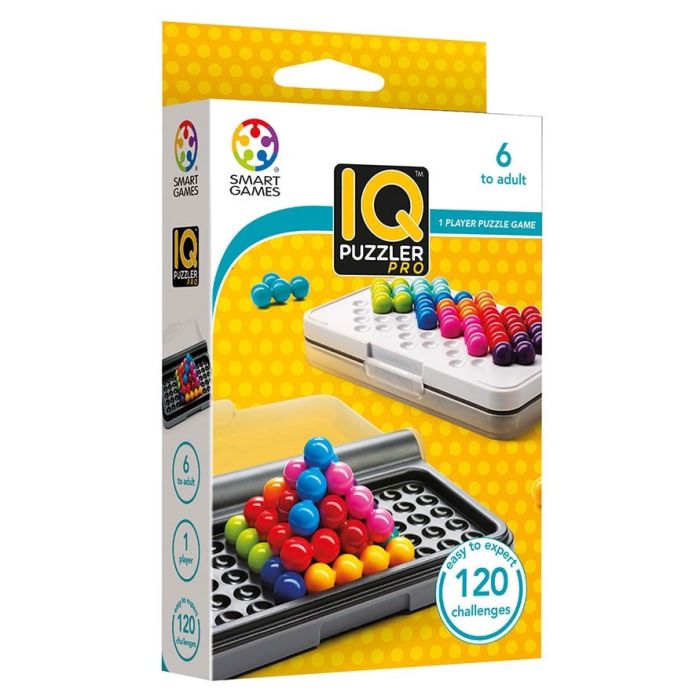
SmartGames IQ Puzzler Pro Game
- Contains 120 challenges in 2D and 3D modes with transparent lid board.
- Skills built: Visual skills (2D/3D switching), executive function (planning ahead how to build), working memory (holding piece positions in mind).
- A compact travel-friendly brain-teaser.
- KEVA Brain Builders Junior Puzzle Game
- Younger-friendly STEM builder: use planks to recreate patterns from cards.
- Skills built: Visual-spatial, planning, trial-and-error reasoning, sustained attention.
- Excellent for the elementary age bracket and a nice “build-it-up” challenge.

- Learning Resources STEM Explorers Brainometry
- A set of puzzle challenges using shape pieces, with focus on pattern recognition, geometry, stacking/sorting.
- Skills built: Visual pattern recognition, working memory (remembering shape relationships), flexible thinking (switching patterns), math foundational concepts.
- Especially good if you integrate it into your homeschool STEM block.

Learning Resources Addition & Subtraction Sum Swamp Game
- A board game focusing on addition & subtraction: roll dice, make number sentences, move around themed swamp board.
- Skills built: Math fact fluency, working memory (thinking of number sentences), executive function (taking turns, planning next move), visual tracking (board-game space).
- Great for family game time with an academic twist.

Learning Resources Alphabet Acorns Activity Set
- Match upper- and lowercase letters inside acorns; stack in letter order; includes counters.
- Skills built: Early reading/spelling (letter matching), visual discrimination (upper vs lowercase), sorting/sequencing (alphabet order), working memory (remembering the order).
- Good for early readers or as a differentiated activity for mixed ages.

Discovery Toys Think It Through Learning Tiles Case
- A hands-on, self-checking tile system for language arts and math skills. Kids work at own pace.
- Skills built: Reading/spelling or math (depending on card set), self-regulation (kids check their own work), working memory (keeping task steps in mind), executive function (task initiation, monitoring).
- Ideal for a homeschool learning station or independent work.

Tips for getting the most out of these gifts
- Make play regular but short. Executive function and memory improve most with repeated, manageable‐length challenges rather than very long, passive sessions. Ten to twenty minutes a few times a week of active learning or intentional play is much better than two hours of a long, passive lesson of worksheets.
- Mix solo and group play. Some of the above are solo (Kanoodle) and some lend themselves to partners/family (Sum Swamp). Group play supports self-regulation and turn-taking (executive skills).
- Encourage reflection. Ask questions like “What strategy did you use?” or “What will you try differently next time?” This builds metacognition (thinking about thinking) which is a key part of executive function.
- Rotate toys to keep novelty. Kids often engage better when a toy feels fresh. A toy used over several weeks then rotated out for a break can increase enthusiasm and focus.
- Use after gift opening activities or during downtime. Since these are holiday gifts, introduce them in unhurried settings. After opening gifts, set aside time for one game. Keep it positive, no pressure. Then play it often in the next few weeks.
- Balance screen and non-screen. Many of these are tactile, board or manipulative games rather than digital apps.
How this fits into your homeschool goals
All of the recommendations in this blog can be used in place of an explanatory lesson or substitute for worksheets. For example:
- A reading lesson: In addition to playing with the Alphabet Acorns, use them as a phonemic awareness or spelling activity by generating words that begin with the letter or change the ending sound. You can also dictate spelling words for your child to build the word from the acorns. You can even have your student select the appropriate capital or lowercase for proper/common nouns.
- A math/engineering lesson: Use the STEM Explorers Brainometry or KEVA Brain Builders. After the hands-on session, ask students to design their own challenge (plan → build → test) and set goals (“I will finish the bridge blocks in under 5 minutes”) → builds planning, persistence, working memory, spatial/mathy thinking.
- A character-trait connection: Tie in the idea of “perseverance” (a part of executive function) by saying: “Just like we practice paying attention in class, we practice focus when we concentrate on a puzzle and don’t give up.” The toy becomes a metaphor and a tool.
Even More Game & Toy Recommendations
Here are even more toys and games, organized by age/grade and by major skill-focus so you can pick what meets your child’s needs.
Age 4-8 (roughly Grades K-2)
- Pop for Letters Game: A fun popcorn-card game where kids draw letter cards and keep them unless they hit the “POP” card. Builds letter-sound recognition, uppercase/lowercase visual discrimination, and visual tracking/attention.
- Alphablast Spelling Game: Kids use an air-cannon to knock down letters and form words. Helps with spelling and early reading, plus visual/physical coordination and working memory (remembering letters, aiming).
- Match It! Spelling Puzzle: Self-correcting puzzles where children match picture-word pieces to build early reading/spelling skills. Good for visual discrimination, memory (where pieces fit) and literacy.
- Spark Create Imagine Spelling Game: Match letters to pictures and form words. Focuses on vocabulary, reading, spelling and letter recognition. Good as a fun gift that also builds those skills.
Age 8-11 (Grades ~2-5)
- SpellChecked Card Game: A card game where kids see an image + first letter and either spell the word correctly or choose among options. Builds spelling, phonics, visual/working memory.
- Gumball Words Board Game: Uses a magnetic‐letter “gumball” board to spell words for points. This game is aimed at kids in grade 3 and up so good transition into more independent. Builds spelling, vocabulary, visual manipulation, and strategic thinking.
- Tic-Tac-Toe or Gobblet: A simple and quick decision-making game. Gobblet adds the demand of working memory to recall the hidden pieces.
- Blockus: Strengthens visual-spatial skills, problem solving, sequencing, planning, and perseverance.
- Sight Word Slam Electronic Game: Digital game (electronic handheld) with over 180 sight words, two modes. Focuses on reading fluency, visual & auditory processing, quick decision making.
- Bee First Math & Spelling Board Game: A dual-game board that offers math and spelling modes; thus supports both literacy and numeracy. Builds number/letter fluency, visual scanning (tunnel board), executive functions (making decisions, planning moves).
Age 11-14 (Grades ~4-6)
- Tapple Word Game: A fast-paced word game with category cards and a 10-second timer; requires quick recall, letter association, visual scanning, working memory (keeping category in mind), executive function (inhibiting wrong answers, switching letters).
- Apples to Apples: A group game with categories and detail cards that can be very silly. Strengthens categorical thinking, language vocabulary, comparison, analogies, and decision making.
- Go or Othello: A simple game of making 5 in a row. Othello adds another dimension of difficulty by allowing players to turn over pieces in defense.
- Settlers of Catan: Settlers of Catan is a strategic board game where players build settlements, roads, and cities on a shared island map made of hexagonal tiles. Players gather and trade resources. Catan builds strong executive-function and critical-thinking skills. Players must plan ahead, manage limited resources, negotiate trades, adapt to chance (dice rolls), and balance short-term and long-term goals.
- Checkers or Chess: These classic games are still popular with kids emerging into strategy games. You can get chess sets in a variety of favorite characters if you want. Your child can also play safely for free or with a paid subscription online at ChessKid.com
How to select & integrate
Here are some quick tips for choosing among these and making the most out of them:
- Match the difficulty to the child’s current level, but lean slightly above to promote growth. E.g., if they comfortably read 3-letter words, push them with 4-5-letter words or faster recall.
- Balance cognitive focus: For example, pair an executive-function game (like the card bundles) with an academic game (like spelling or math) to cover both strategic thinking + subject skills.
- Use game-time for reflection: After play, ask questions like “What strategy did you use?” “What helped you remember?” “What will you try differently next time?” This reinforces metacognitive/character traits (attention, persistence).
- Embed into your curriculum: Since you often design lesson blocks, choose a game as part of a “cognitive skills” station or “brain‐gym” warm-up. For example: start class with 5 minutes of the executive-function card game, then transition into a reading/spelling block.
- Rotate games: Keep novelty by having 2-3 games in play rotation. Use one week, then swap out, so each game stays fresh and engagement remains high.
- Encourage group play where possible: Many of these games support 2+ players. Group play adds social skills, turn-taking, self-regulation (important executive skills).
- Monitor and scaffold: Especially with younger children, you may need to model how to think about the game, how to scan visually, how to plan a move, or how to talk aloud. That modeling helps build the executive-function foundations.
Differentiated Games!
Any of the games listed above are great for most kids, but sometimes us moms of unique learners have the challenge of finding games our neurodivergent kiddos can play with their neurotypical siblings or to stay engaged in learning while you work with siblings. Here are 8 extra games grouped by differentiation focus—so you can pick based on specific needs (e.g., attention/working memory, math-lovers, kids who resist reading).
For kids with attention / working-memory / executive-function challenges
- Memory Master – Executive Functioning Card Game: A card game specifically designed to target executive functioning (working memory, focus, detail attention).
- BrainBolt Boost Hand‑Held Memory Game: A portable electronic memory/challenge game (sequence recall) that strengthens visual & working memory, good for shorter bursts of play when attention span is limited.
For kids who love math or could be motivated by numeracy games
- Quokka, Who Knows Brainy Numbers and Money Moves Better?: Board games focused on math skills (addition, subtraction, place value) through game play—great for kids who enjoy numbers.
- Bee First – Math & Spelling Board Game: Dual-mode game (math and spelling) but the math part is strong; for kids who lean toward numeracy and might want something playful and themed.
For kids who resist reading/spelling (or need extra motivators)
- The Learning Journey Match It! Spelling: A more manipulative game (matching letters + pictures) for spelling/reading. Good for kids who need visuals + hands-on to engage.
- Match and Spell Board Game: Another spelling/phonics board game with picture-word matching and progressive difficulty—good for kids who need incremental steps and reward structure.
Final thoughts
When you give a gift that is fun, engaging, and skill-building, you’re hitting that sweet spot: holiday joy and investment in capacity. For kids in elementary grades, choosing a toy/game that supports executive function + working memory + academic skills is an excellent strategy.