Homeschooling a child with spiky skills is a bit like hiking a beautiful trail full of unexpected hills and dips. Some days your child is cruising along at the top of their abilities; other days, a little rut pops up and suddenly reading, math, or writing feels harder than it did last week. This is normal. This is human. And with the right routine, it can also be manageable.
Below, let’s break down what it means to build a routine that honors your child’s strengths, protects their confidence, and keeps learning moving forward—even when the day is wobbly.
Understanding Spiky Skill Profiles
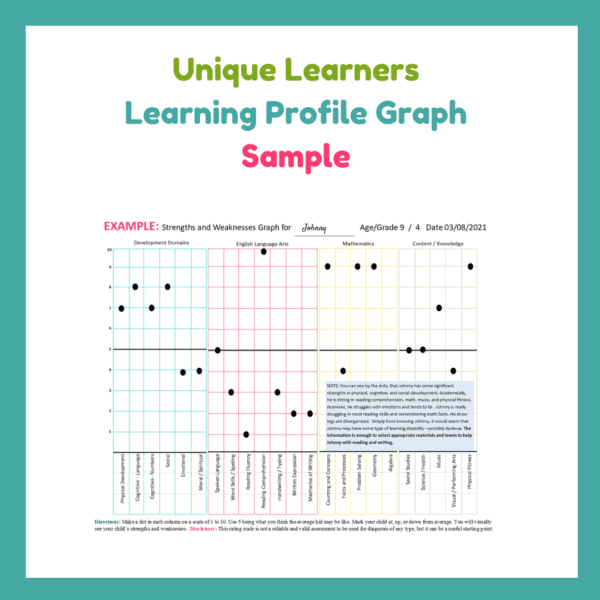
A “spiky profile” simply means a learner has areas of strong ability right next to areas of real struggle. This is common for neurodivergent kids—especially those with dyslexia, dysgraphia, ADHD, autism, or prenatal exposure.
A child might read at a 5th-grade level, but write at a 1st-grade level… or solve high-level math problems but crumble when asked to copy notes… or understand science concepts beautifully but struggle to retain phonics patterns. Often a spiky profile is even more subtle, involving spikes in processing skills.
If you have a full neuropsychologist’s assessment, we are happy to interpret the report for you! Knowing what the results indicate can help tremendously in selecting homeschool curriculum and setting up a routine that will actually work.
You can fill out our Unique Learner’s Learning Profile Graph from your own knowledge. You can get a copy in the FREE Learning Plan Success Kit.
If you want a private assessment about how your child learns or academic grade levelsUnique Learners can also provide cognitive and achievement testing for homeschoolers at a discounted price. Sometimes the assessments can be done online virtually. Contact us if you want to set up an assessment for your child.
When the skill profile is uneven, the homeschool routine has to be flexible and responsive.
Anchor Your Routine in Learning Levels, Not Grade Levels
Most parents are familiar with grade level. But that number doesn’t tell you what your child can actually do today.
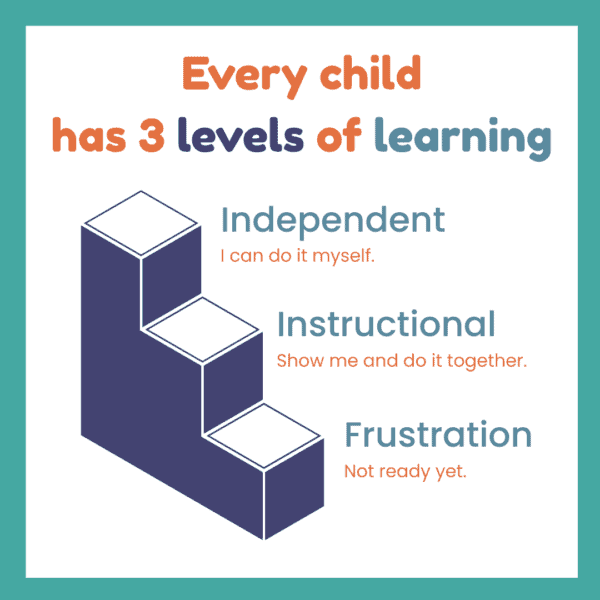
Instead, build your routine around these three levels:
1. Independent Level
This is the work your child can do on their own with 95–100% success.
It’s easy. It’s confidence-building. It’s low-stress.
Use this for:
- Warm-ups and brain-openers
- Days when your learner is dysregulated, tired, overstimulated, or “off”
- Independent practice while you teach another child
- Review that strengthens long-term retention
Independent-level work is the backbone of smooth homeschool days.
2. Instructional Level
This is the sweet spot—work your child can do with support and modeling, usually with 75–90% accuracy.
This is where TEACHING happens.
This is where your direct instruction, scaffolds, modeling, and guided practice live.
Examples:
- New phonics patterns
- Writing with sentence frames
- Multi-step math problems with worked examples
- Short reading passages with guided questioning
If everything in the day feels like a battle, it usually means the work is sitting above your child’s instructional zone.
3. Frustration Level
This is the “nope” zone — the level where the task shuts down learning.
You’ll see:
- Avoidance
- Meltdowns
- Silly behavior
- Rushing
- “I can’t do this!” statements
Work in this zone is not character-building. It is simply too hard right now. When a child is repeatedly pushed into frustration level, regression, anxiety, and shutdowns become more likely.
A great routine helps you stay in the “instructional” zone and pull back to the “independent” zone when needed.
Build a Daily Rhythm That Flexes With Their Needs
A good routine is predictable—but not rigid. Try structuring your day in layers instead of blocks:
Layer 1: Warm-Up (Independent Level)
- Easy handwriting practice
- A simple math facts page
- Matching, categorizing, or sequencing task cards
- A familiar workbook page
This gets the brain going without flooding the nervous system.
Layer 2: Teaching Time (Instructional Level)
Choose one or two priority subjects for direct instruction.
Not five. Not eight. Just the essentials.
Examples:
- Phonics lesson (10–20 min)
- Math lesson (10–20 min)
- A short writing session with dictation or scaffolds
Teaching time should be short, explicit, and interactive.
Layer 3: Independent Rotation
Offer choices for simple, successful tasks such as:
- Puzzles
- Fine-motor task boxes
- Pattern blocks
- Dot-to-dot
- Easy read-and-respond pages
- Copywork at the child’s easy level
This gives you time to work with siblings or reset the room.
Layer 4: Optional Enrichment
If your child is excited to learn and full of energy:
- Science experiments
- Unit study projects
- Coding
- LEGO challenges
- Cooking
- Art lessons
If they’re running low, enrichment can be skipped guilt-free.
A Plan for “Off Days,” Regressions, and Wobbles
Spiky skills naturally mean some days feel like you’ve suddenly slid backward. Regression is common during:
- Growth spurts
- Illness
- Sleep disruptions
- Big emotions
- Transitions
- Overstimulation
You’ll want a prepared set of “gentle day tools” so you’re not scrambling.
Gentle Day Tools: What to Use When Nothing Is Clicking
1. Task Boxes
Task boxes are amazing for wobbly days because they’re:
- Hands-on
- Low-pressure
- Predictable
- Easy to reset
- Confidence-boosting
Great task box ideas:
- Sorting (colors, shapes, letters, sounds, categories)
- Matching upper/lowercase letters
- CVC building with letter tiles
- Tally mark or ten-frame activities
- Fine-motor tasks (pom-pom push, tweezers, clothespins)
- Pattern cards
- Sequencing strips
2. Sensory Activities to Regulate the Nervous System
When the brain is stuck, the body often needs attention first. Sensory breaks are not “extra”—they’re essential.
Try:
- Heavy work (pushing laundry basket, wall pushes, carrying books)
- Trampoline or hopping paths
- Kinetic sand
- Water play
- Playdough or putty
- Sensory bins with rice/beans/kinetic sand
- Swinging or rocking
- Noise-cancelling headphones during work
A regulated child learns better. Period.
3. Easy Independent Workbooks and Task Cards
Every homeschool parent should have a folder or tote labeled:
“Emergency Independent Work”
Stock it with:
- Low-reading-level comprehension passages
- Simple math review sheets
- Color-by-code
- Trace-and-copy pages
- Word sorts
- Picture-based task cards
- Matching games
- Cut-and-paste organizers
- Morning work pages
These should all be at the independent level, so your child experiences success even on a hard day.
Why This Routine Works
A spiky skill routine is powerful because it:
- Protects the child’s confidence
- Prevents overload
- Supports real progress over time
- Gives you predictable rhythms
- Minimizes battles
- Honors your child’s nervous system
- Allows you to adjust quickly on rough days
Consistency + flexibility = your homeschool superpower.
When to Expect Growth
Progress often shows up in:
- Better stamina
- Fewer meltdowns
- Increased willingness to try
- More independence
- Improved mastery in small steps
Kids with spiky profiles (or really all kids) learn in spurts, not straight lines, just like physical growth spurts. Keep showing up. Keep adjusting the levels. Keep building a rhythm that works for your child’s actual brain, not an imaginary grade-level chart.