
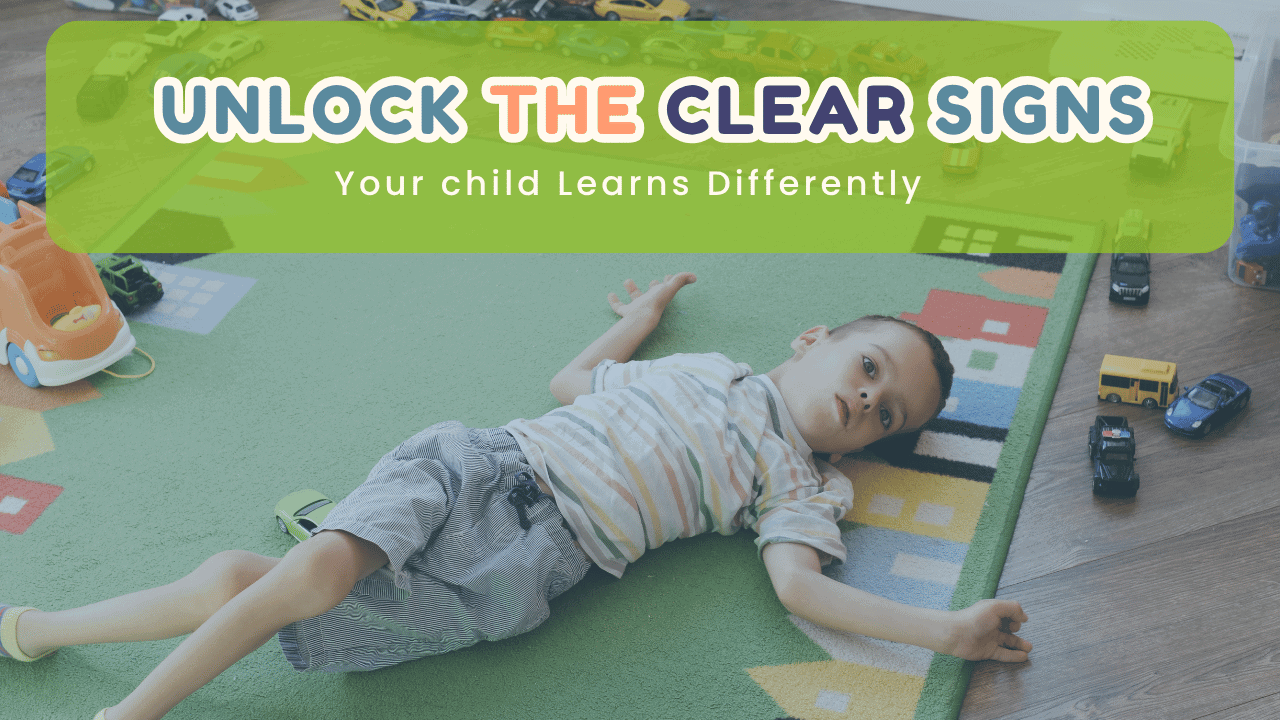
A homeschool mom’s guide to spotting early signs your child learns differently — and responding with confidence
Introduction: When Something Feels “Off”
Have you ever looked at your child and thought, “They’re smart…so why is learning so hard?” If you’re noticing unusual struggles with reading, writing, math, attention, or behavior, you may be seeing early signs your child learns differently. That quiet sense that something isn’t quite clicking is something many homeschool moms experience, and it often leads to important discoveries about how their child’s brain works. These differences don’t mean your child is falling behind in a permanent way. More often, they point to learning brain differences in children, such as dyslexia, ADHD, autism, or FASD. When you begin to understand those differences, you can start teaching struggling learners at home in ways that are far more effective and encouraging.
What Does It Mean When a Child Learns Differently?
Every child learns in a unique way, but some children process information so differently that it significantly affects their daily learning. These differences can impact how a child understands language, maintains attention, remembers information, or responds to sensory input. This is often described as neurodivergence, a term that simply means the brain develops and functions in ways that differ from what is considered typical. Children with these differences are not less capable; they simply require different teaching approaches. When parents begin to see learning through this lens, it becomes easier to shift from frustration to curiosity and from confusion to purposeful support.
Common Signs Your Child Learns Differently
One of the clearest indicators that a child learns differently is a consistent pattern of struggle over time. For some children, this shows up most noticeably in reading and language. A child may have difficulty learning letter sounds, struggle to sound out simple words, or become easily frustrated and avoid reading altogether. These patterns are often associated with dyslexia and are commonly discussed in resources focused on dyslexia explained for parents. It can be especially confusing when a child is verbally bright but cannot seem to transfer that ability into reading.
Other children may show differences in attention and focus. They may seem easily distracted, have trouble completing tasks, or move constantly as if their body cannot settle. Following multi-step directions may feel overwhelming, and even simple routines can become a challenge. These are often described as ADHD homeschool challenges, and they reflect differences in how the brain regulates attention and manages tasks.
In some cases, parents notice differences in social interaction or sensory responses. A child may struggle to read facial expressions or tone of voice, rely heavily on routine, or react strongly to sounds, textures, or lights. These traits are often connected to autism learning differences, where the brain processes social and sensory information in unique ways. These children often thrive when their environment is predictable and aligned with their sensitivities.
There are also children who experience difficulties with memory and processing that seem inconsistent. A child may understand a concept one day and appear to forget it the next. They may struggle to connect actions with consequences or have difficulty applying learned skills in new situations. These patterns are sometimes associated with FASD symptoms in children, particularly when there has been prenatal exposure affecting brain development. The inconsistency can be confusing, but it reflects neurological differences rather than a lack of effort.
When to Look More Closely
It is important to remember that all children have challenging days, but persistent patterns are worth paying attention to. If struggles continue despite consistent teaching, if progress feels unusually slow, or if your child begins to show signs of frustration, anxiety, or avoidance, it may be time to look more closely. Many parents describe a growing sense that what they are trying simply is not working, and that feeling is often the first clue that a different approach is needed. Trusting that instinct can lead to meaningful changes that support your child more effectively.
What to Do Next
When you begin to recognize signs that your child learns differently, the next step is not to panic but to observe carefully. Paying attention to patterns over time can provide valuable insight into what your child needs. Noticing when struggles occur, what seems to help, and how your child responds to different approaches can guide your decisions moving forward.
Learning more about specific learning differences can also be incredibly empowering. As you explore topics like dyslexia explained for parents, ADHD homeschool strategies, autism learning differences, and FASD symptoms in children, you begin to replace uncertainty with understanding. This knowledge helps you interpret your child’s behavior more accurately and respond in ways that support growth rather than frustration.
At the same time, it is often helpful to adjust how you teach rather than focusing only on what you teach. Many children benefit from multisensory learning homeschool methods, where lessons involve movement, visual supports, and hands-on experiences. Shorter, more structured lessons can make learning feel manageable, and incorporating physical activity can help improve focus and retention. These adjustments often make a noticeable difference, even before any formal diagnosis is made.
For some families, seeking outside input can provide additional clarity. Educational evaluations, speech and language assessments, or occupational therapy screenings can help identify specific needs and guide your homeschool approach. Even if you choose to continue homeschooling independently, having this information can make your teaching more targeted and effective.
Perhaps most importantly, it is essential to protect your child’s confidence throughout this process. Children who learn differently are often aware of their struggles, and without encouragement, they may begin to believe they are not capable. By celebrating effort, recognizing strengths, and creating a supportive learning environment, you help shape a healthier and more resilient mindset.
What This Means for Your Homeschool
As you begin to understand signs your child learns differently, your homeschool naturally begins to change. You may find yourself letting go of rigid expectations and instead focusing on what truly helps your child learn. Rather than trying to fit your child into a standard curriculum, you start to adapt your teaching to fit your child. This shift often leads to more meaningful progress, even if it looks slower on the surface. Over time, learning becomes less of a struggle and more of a partnership.
Encouragement for the Journey
If this journey feels overwhelming, take heart. You are not behind, and you have not failed your child. You are learning how to teach a unique brain, and that takes time, patience, and grace. The fact that you are noticing these signs and seeking answers is a powerful step forward. With understanding and the right support, your child can grow, learn, and thrive in ways that reflect their true potential.
Sources
- Centers for Disease Control and Prevention. (2023). Developmental Disabilities and Learning Disorders Overview.
- National Institute of Mental Health. (2022). Attention-Deficit/Hyperactivity Disorder.
- National Institute on Alcohol Abuse and Alcoholism. (2021). Fetal Alcohol Spectrum Disorders (FASD).
Grab your FREE e-book guide to revamp your homeschool for success!
Are you new to homeschooling, or just wanting a fresh start? Download our FREE “How to Homeschool in 6 Easy Steps” guide and get valuable insights from Sue’s 30+ years of experience as a special educator and homeschool mom of 4!
Want to know about new products and blogs?
Join our email newsletter to be the first to know about a new homeschool and special needs blog, and new products from our shop! Sign up for only the newsletter, or grab your FREE “How to Homeschool in 6 Easy Steps” guide and you will also be added to the newsletter!
Also, join our Facebook group!
Join our “Homeschool Help for Special Needs” Facebook group! It is a place for homeschool moms to ask questions about homeschooling a child with special learning needs, share teaching and curriculum ideas that have worked (and those that bombed), and be real about the unique challenges of homeschooling with special needs. If you want to join us, be sure to answer the member questions to help us keep this private group secure. Join us now!


