
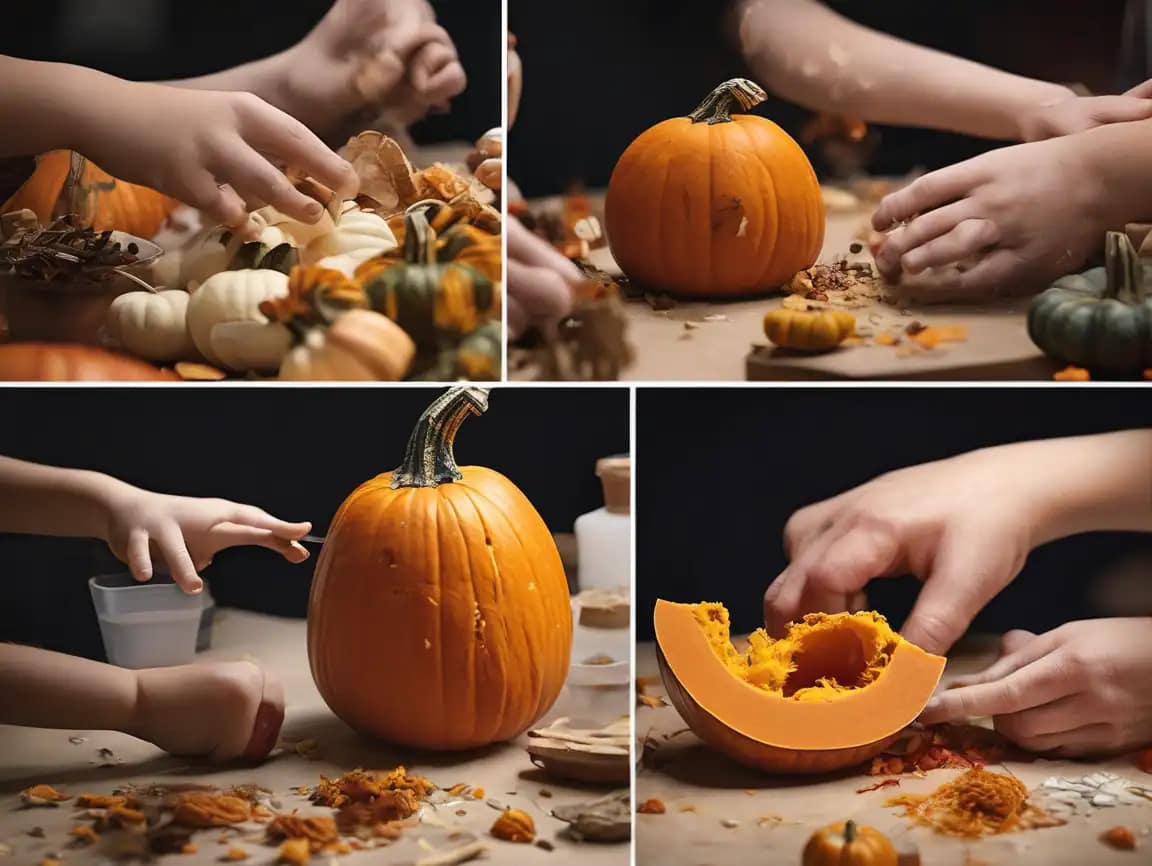
If you’ve ever carved a pumpkin and thought, “Wow… there’s a lot going on in here,” you’re absolutely right! A pumpkin is basically a ready-made science lab, art supply bin, math manipulative, and sensory experience all in one.
Instead of just carving it and tossing the parts, let’s use every part of the pumpkin—stem, skin, pulp, flesh, seeds, and even the stringy goop—to create a hands-on STEM unit study your upper elementary and middle school kids will actually enjoy.
1. Pumpkin STEM Science Explorations (All Parts!)
Dissect a pumpkin like a scientist!
Before you start any activity, grab a few different pumpkins — maybe a small sugar pumpkin, a warty heirloom, or a big jack-o’-lantern type. Have your kids compare the stems.
Have your kids explore each part:
- Stem – How does it attach? Why is it woody? Then cut open a pumpkin and look at where the stem connects to the inside. That’s where the pumpkin gets its nutrients while it’s growing! It’s like a pumpkin belly button. LOL
- Skin – Why is it tough? What colors or patterns do you see?
- Flesh – Why is it thick?
- Pulp/Stringy Fibers – What’s their job?
- Seeds – Why so many?
- Base Blossom End – Wait… there’s a “bottom” stem too?
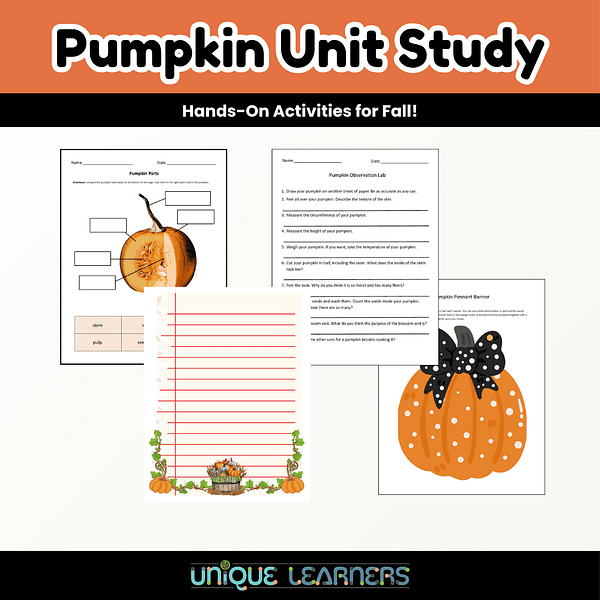
They can sketch and label the inside using an observation mini-lab sheet (included in the worksheet pack!).
2. Cut-and-Paste Pumpkin Anatomy
Use a full-color diagram with pieces of the pumpkin cut apart. Kids match labels like:
- Stem
- Rind/Skin
- Flesh
- Pulp/Fibers – Look at the fibers close up with a microscope or jeweler’s loupe.
- Seeds – Count the seeds by making groups of 10.
- Seed Cavity
- Blossom End
You can even turn it into a mini game — cut the pieces apart, mix them up, and time how fast your child can reassemble them correctly. This reinforces vocabulary and structure in a hands-on way and included in the FREE activity pack.
3. Pumpkin Art & Design Challenge
Let kids choose any part of the pumpkin and create an up-close scientific illustration or mixed-media artwork.
- Use watercolors for skin textures
- Glue various types of pasta or pumpkin seeds to a pumpkin shape. When dry, paint it orange with a brown stem.
- Paint a brown paper lunch bag orange. When dry, decorate with black triangles into a jack-o-lantern. Fill the bag with newspaper or plastic shopping bags. Then tie the top for the stem with brown paint.
4. Pumpkin Math & Data Collection
Pumpkins are AMAZING for hands-on math! Try this:
Measure and record:
- Circumference of pumpkin
- Height of the pumpkin
- Weight (whole and after scooping out seeds) – Talk about the total weight and sum of parts.
- Number of seeds
Then create graphs or ratios:
- Flesh vs. seed weight
- Average seed size
- Estimate total seeds before counting—were they close?
Older kids can even calculate volume or surface area!
5. Pumpkin Literacy & Writing
After exploring, kids write or discuss:
- “Which pumpkin part is most important and why?”
- “What surprised you the most?”
- “If pumpkin seeds could talk… what would they say?”
- Write a poem about pumpkins
- Persuasive writing: “Pumpkin seeds are the best healthy snack!”
- Encourage them to create a list of adjectives by describing the smell, touch, texture, and even thickness of their pumpkin.
You can also write:
- Pumpkin vocabulary cards
- Compare/contrast two pumpkin varieties
6. Pumpkin Sensory Investigations
For sensory-seeking learners:
- Squish the pulp
- Snap or saw dried stems
- Rub skin and describe texture. Can you soften the skin with lotion?
- Smell each part (fresh vs cooked or fresh vs rotten)
- Separate seeds by size or texture
- Taste. Cook pumpkin in several different forms. Make a pie or quick bread.
Want to add science? Try the float or sink test on seeds, stem pieces, and skin!
7. Pumpkin + Technology
Here’s where middle schoolers shine!
Have them:
- Use a microscope or digital microscope to view pumpkin fibers or seed coats
- Take photos of each pumpkin part and create a labeled slideshow
- Research how farmers use pumpkin by-products
- Design a “Pumpkin Processing Machine” in TinkerCad/Scratch
- Create a stop-motion pumpkin dissection video
- “Dress up” a small pumpkin with a hat, scarf, collar, etc. Take photos of the pumpkin in different places around the house. Print out the photos and write a story about the adventures of the pumpkin. Make it into a picture book.
8. PUMPKIN STEM Engineering
Challenge:
Read Peter, Peter, Pumpkin Eater. Build a model house using only pumpkin parts and toothpicks!
Kids can:
- Use dried stems as beams
- Use seeds as connectors
- Use pulp as “glue” – ok to mix with corn starch or flour.
- Build bridges, towers, or sculptures
Talk about strength, structure, and stability—just like real engineers!
BONUS: Cooking = Science + Math!
Roast seeds and:
- Test different flavors (salt, cinnamon, ranch)
- Measure ingredients
- Track cook time
- Predict which flavor will be most popular
- Do a taste-test survey and graph results
Boom—math, science, sensory, and social skills in one yummy lesson!
Final Thought…
You don’t need fancy curriculum to teach STEM.
Sometimes the best lessons are messy, seasonal, and straight from nature.
A pumpkin is more than a decoration—it’s a full learning experience waiting to happen.
And to make life easier for you…
🎃 Want to take these pumpkin stem activities even deeper?
I created a FREE ready-to-print Pumpkin Stem Activity Pack just for you!
It includes:
✅ Full-color cut-and-paste activity
✅ Hands-on observation mini-lab sheet
✅ Label-the-parts diagram
✅ Bonus extensions for writing, vocabulary, and creativity


