
As homeschool moms, we often dream of our kids having not just strong academics, but also strong relationships. For children who need social skills training for autism, anxiety disorders, and other special learning needs, making friends doesn’t always come easily.
Two of the most tragic experiences I hear every year are about a child being excluded from a birthday party with peers or inviting supposed friends to their own birthday party only to have noone show up. These situations hurt my heart and make me want to cry in pain for these sweet kiddos who can often come across as prickly or self-centered or even weird to neurotypical kids. As sad as these experiences are, they remind us that teaching all of our children how to practice social skills that build friendships.
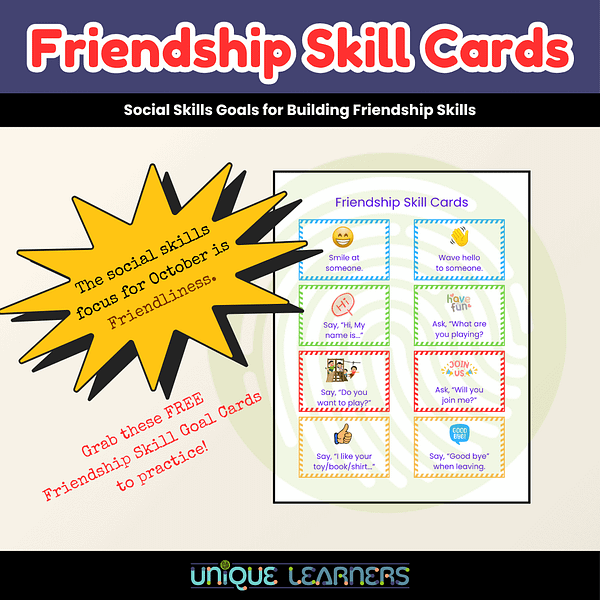
Social skills—like smiling, greeting others, or joining a group activity—are not always instinctive, especially for children with ASD, ADHD, Anxiety, and even Dyslexia. The good news is that friendliness can be taught and practiced just like reading, math, or handwriting. With patience, encouragement, and a few creative strategies, we can help our kids grow in confidence and connection. Grab our FREE Friendship Skills Goal Cards HERE.
Start Small: The Power of a Smile
A simple smile is the first step toward friendliness. Practice smiling in front of a mirror together or role-play “smile and wave” games. Some children may need reminders that a smile helps others feel safe and welcome.
Teach the Words to Say
For kids who struggle to know how to start a conversation, scripts can be a lifesaver. Teach simple openers like:
- “Hi, my name is…”
- “Do you want to play?”
- “I like your toy/book/shirt.”
Practice these in low-stress settings with siblings or close friends.
Model and Role-Play
Children learn best by seeing and doing. Demonstrate friendly behavior with your own interactions—greeting neighbors, asking questions, and showing interest. Then set up role-play scenarios where your child can try these skills in a fun, safe way.
Practice with Purpose
You can use the Frienship Skills Goal Cards as “pocket keepers,” where you print out the cards on regular paper and cut them apart. As you work on each goal, give each of your children a card to stick in their pants pocket as a reminder to practice that skill. Most likely, they won’t even need to pull it out! Build social skill practice into everyday life:
- At the grocery store, let your child say hello to the cashier.
- At church or co-op, encourage them to greet one familiar peer each week.
- Set up short playdates with clear activities (building Legos, baking cookies) so the focus isn’t just on conversation.
Use Visual Supports
Visual cues like picture cards, social stories, or a “friendship checklist” can guide kids through steps of friendliness. For example: 1) Smile, 2) Say hello, 3) Ask one question. Over time, these steps can become natural habits.
Celebrate Efforts, Not Perfection
Friendliness grows little by little. Cheer for every brave step—whether your child made eye contact, offered a toy, or remembered to say “hi.” Encouragement fuels confidence, and confidence builds connection.
Final Encouragement
Helping our children build friendliness isn’t about changing who they are—it’s about equipping them with tools to connect. Every child, regardless of learning needs, has the ability to share kindness and form meaningful relationships. With steady guidance, practice, and lots of love, our kids can shine as friendly, thoughtful friends.


